



.svg)
Wet rooms have quietly become one of the most requested looks in high-end bathroom design: a single, open, fully waterproofed space where the shower, and sometimes a freestanding tub, share the room with no curb, no enclosure, and often no glass at all. It's the spa-resort aesthetic, and it photographs beautifully. But a wet room is as much a construction decision as a design one, and it isn't the right fit for every home or every budget.
Before you fall for the look, it's worth understanding what a wet room actually is, what it costs, and the waterproofing realities that make or break one. This guide walks through the honest pros and cons and the investment you're signing up for, so you can decide whether a wet room is right for you.
What Is a Wet Room?
A wet room is a bathroom where the entire space is waterproofed and the shower area flows into the rest of the room without a curb, tray, or full enclosure. Instead of containing water to a shower stall, the whole floor is tanked, sloped to a drain, and finished so that getting the room wet is by design, not a problem.
Most wet rooms keep a frameless glass splash panel to shield the vanity and toilet, but the defining trait is the open, barrier-free, curbless layout and the continuous waterproofing beneath every surface. That single difference, waterproofing the entire room rather than just a shower box, is what drives both the appeal and the cost.
The Pros of a Wet Room
A wet room's biggest advantages are its seamless look, easy maintenance, accessibility, and ability to make a small bathroom feel larger. These are real, lasting benefits when the room is built correctly.
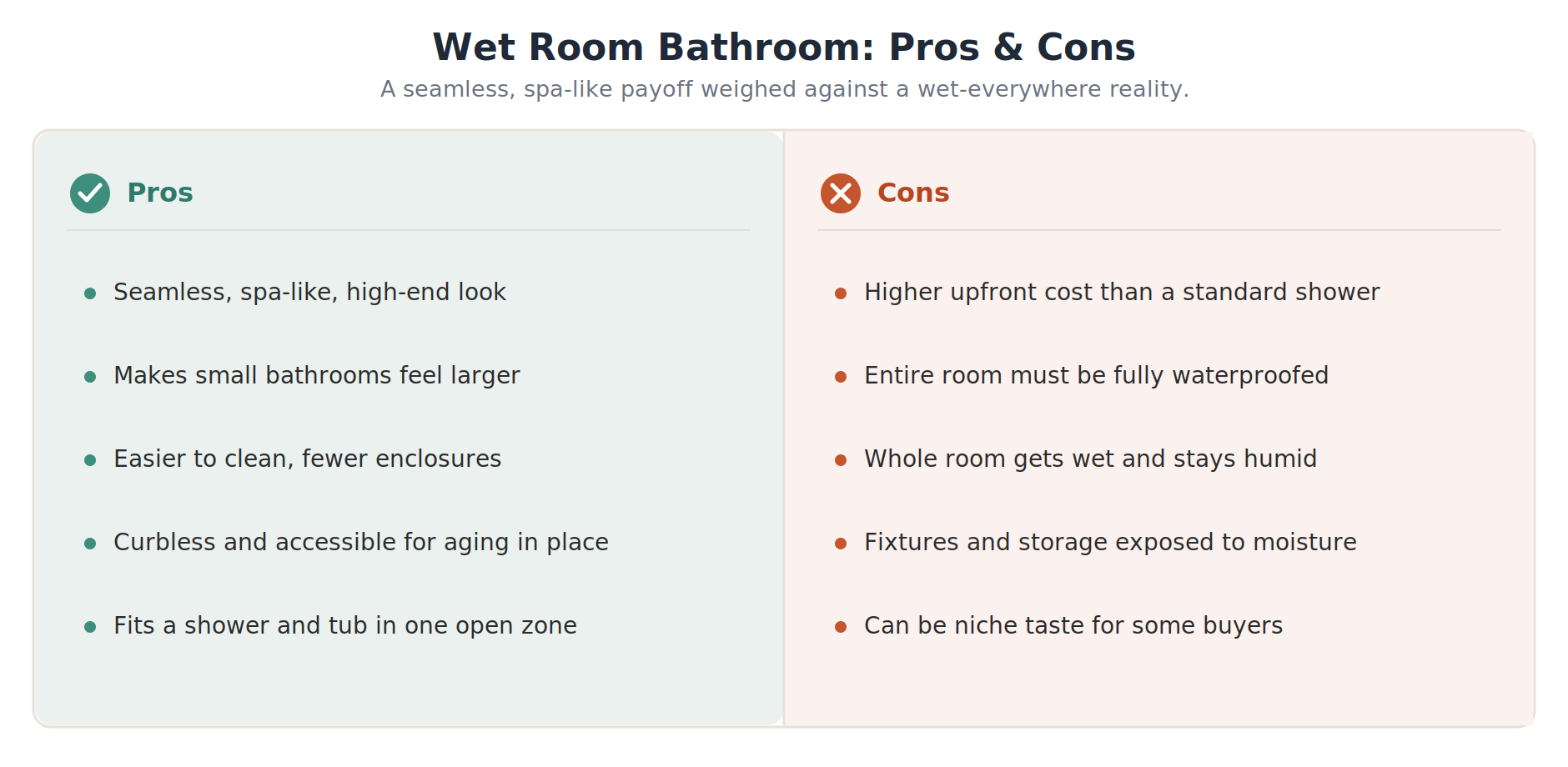
The open, curbless design delivers a sleek, high-end, spa-resort aesthetic that few other layouts match, and because there's no shower tray or enclosure to work around, continuous floor tile makes even a compact bathroom feel more spacious. Maintenance is genuinely easier too: with fewer enclosures, frames, and crevices, and often a single large-format tile throughout, there's far less to scrub. The curbless, step-free floor is also excellent for accessibility and aging in place, allowing walker or wheelchair access without a threshold. And in a tight footprint, a wet room is often the only way to fit both a shower and a freestanding tub, because they can share one open wet zone instead of each needing its own space.
The Cons of a Wet Room
The main drawbacks of a wet room are the higher cost, the demanding waterproofing, and the reality that the whole room gets wet. These are the trade-offs to weigh honestly before committing.
The entire room, not just a shower stall, has to be fully waterproofed, which is more labor, more material, and more expertise, so a wet room costs more than a standard shower installation. That same open design means moisture reaches everywhere: the toilet paper, towels, and anything stored in the open can get damp if there's no splash protection, and the whole room stays humid longer, making strong ventilation essential. Some buyers also prefer a traditional separate shower and tub, so an all-open wet room can be a niche taste at resale. And the margin for error is thin, because if the waterproofing fails, you don't get a leaky shower pan, you get water in the floor and walls of the entire bathroom. A wet room rewards expert construction and punishes shortcuts.
There's also a practical daily consideration people overlook: without a glass panel, a wet room can leave the whole floor wet after a shower, which means either designing in a splash screen or accepting that the floor needs a quick squeegee or simply time to dry. Heated floors help here, drying the surface faster and taking the chill off the tile, which is why they pair so naturally with wet rooms.
Wet Room Pros and Cons at a Glance
Here's the trade-off in one view.
What Does a Wet Room Cost?
A wet room costs more than a conventional shower because the whole room requires professional waterproofing, or tanking, plus precise floor sloping to the drain. You're paying for a complete waterproof membrane system across the floor and walls, a correctly pitched floor, and the skilled labor to execute both flawlessly, rather than a prefabricated pan dropped into a stall.
Exactly how much more depends on the size of the room, the materials, and the complexity of the layout, which is why a project like this is best priced after a contractor sees the space. We keep current numbers on our bathroom remodel pricing page, but the key point is that the money goes largely into work you'll never see: the membrane, the slope, the drain, and the moisture-resistant substrate. That hidden investment is exactly what makes the difference between a wet room that lasts decades and one that fails, so it's the last place to cut.
Who Is a Wet Room Right For?
A wet room is right for you if you want a modern, open, spa-style bathroom, value easy maintenance and accessibility, and are working with an experienced builder who will get the waterproofing right. It's an especially strong choice for small bathrooms that need to feel bigger, for aging-in-place plans that need a step-free floor, and for anyone determined to fit both a tub and a shower into a tight footprint.
A wet room is probably not right for you if you want the shower fully contained away from the rest of the room, if keeping the toilet and towels completely dry is a priority, or if your budget doesn't allow for proper full-room waterproofing. In those cases, a curbless walk-in shower with a glass enclosure gives you much of the modern look with the water contained. The National Kitchen and Bath Association tracks curbless and barrier-free showers as a leading bathroom trend, and a wet room is simply the fullest expression of that idea.
The Bottom Line on Wet Rooms
A wet room can be a stunning, durable, genuinely luxurious bathroom, but only when it's built on flawless waterproofing by a team that has done it before. The look is the easy part; the tanking, the slope, the drainage, and the ventilation behind it are what determine whether you have a spa for the next twenty years or a hidden water problem. Weigh the open, wet-everywhere reality against the seamless payoff, and if the trade-offs fit how you live, a wet room is one of the most striking upgrades a bathroom can get.
Brutsky Builds is a Bellevue-based, licensed, insured, and bonded design-build general contractor (license #BRUTSBL783ON) serving Seattle and the greater Eastside. Wet rooms live or die on waterproofing, and we engineer the membrane, slope, drainage, and ventilation that make them last, backed by a one-year installation warranty. Explore our custom bathroom remodels or call (206) 316-9937 to find out whether a wet room is right for your space.


.svg)
.svg%20fill.svg)


.webp)
.webp)
.webp)

.svg)