


.svg)
Homeowners spend weeks choosing the perfect tile for a custom shower and almost no time thinking about the lines between it. That's a mistake, because the grout is doing the hard work. The tile is the finish you see, but the grout is what keeps water out, resists mold, and determines whether those crisp lines still look clean in ten years or turn gray, cracked, and stained. The beautiful tile you pick is only as durable as the grout holding it together.
In a custom bathroom, the real decision comes down to two materials: traditional cement grout and modern epoxy grout. They look similar in the tube and worlds apart on the wall. One is porous, needs regular sealing, and is vulnerable to mold in damp Pacific Northwest bathrooms. The other is fully waterproof, never needs sealing, and costs more to buy and install. Here's exactly how they differ, where each one belongs, and how to choose the right grout for your remodel.
What's the Difference Between Epoxy and Cement Grout?
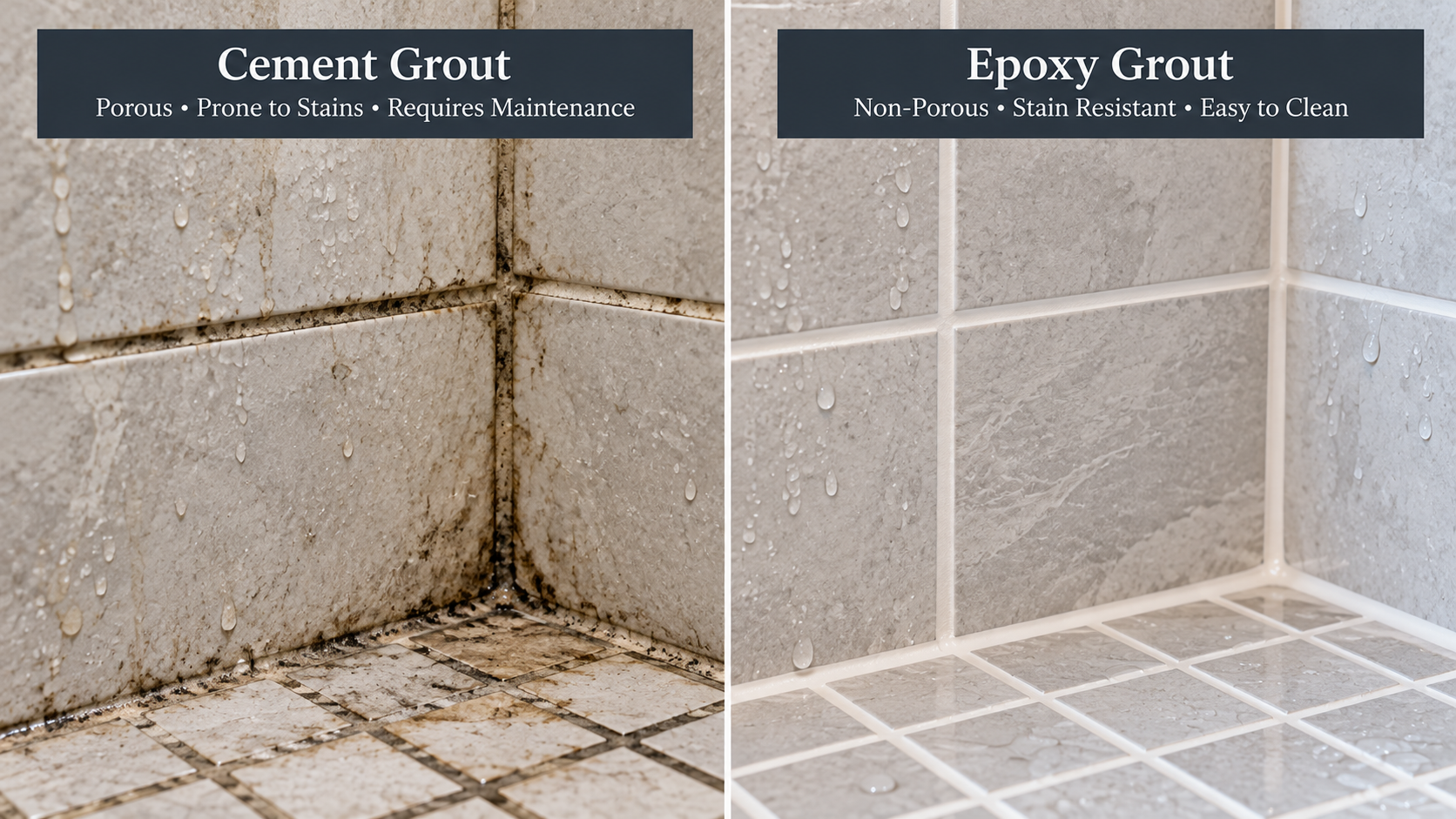
The core difference is what they're made of and whether they absorb water. Cement grout is a mix of Portland cement, water, and color pigment (with or without sand), and it's inherently porous. Epoxy grout contains no cement and no water at all. It's formulated from epoxy resins and a filler powder that cure through a chemical reaction into a hard, non-porous, plastic-like solid.
That single distinction drives everything else. Because cement grout absorbs water like a sponge, moisture can migrate down beneath the tile, which forces your underlying waterproofing membrane, like a Schluter-Kerdi system, to do all the heavy lifting. Epoxy grout, by contrast, acts as a first line of defense against water intrusion rather than a weak point. In a region as wet as the Eastside, that difference matters. The Tile Council of North America sets the installation standards that govern how both materials perform in wet areas, and the gap between a porous joint and a sealed one is exactly what those standards address.
Which Grout Resists Stains and Mold?
Epoxy grout wins decisively on stains and mold because it's chemically inert and completely non-porous. Nothing soaks in. Cement grout must be sealed immediately after installation and re-sealed every one to two years to keep shampoo, soap scum, and hard water from staining the joints, and even then it stays vulnerable to mold and to efflorescence, the white mineral deposits that bloom on cement over time.
Epoxy grout never needs sealing. It's impervious to stains, harsh cleaning chemicals, and mold growth for the life of the installation. For anyone who wants pristine white grout lines in a primary shower, this is the deciding factor: epoxy is the only material that guarantees the color won't yellow or darken from daily water exposure. White cement grout in a wet shower is almost guaranteed to discolor; white epoxy grout stays white.
Why Is Epoxy Grout Harder to Install?
Epoxy grout is notoriously difficult to install, and that difficulty is the main reason it costs more in labor. It has a very short pot life, meaning it hardens quickly in the bucket, so it has to be mixed and applied in small batches and worked fast. Cement grout, by comparison, is highly workable, easy to wipe off the tile during installation, and forgiving even for average installers.
The real risk with epoxy is haze. If it isn't washed off the face of the tile with a specialized acid wash immediately, it leaves a permanent epoxy haze that can ruin high-end tile. There's no going back to fix it later. That strict, unforgiving installation window is why epoxy demands genuinely skilled tile setters and carries a labor premium. It's also why the installer's experience matters as much as the material: epoxy grout in the hands of the wrong crew can damage the very tile you paid a premium for.
Which Grout Is Better for Heated Floors and Curbless Showers?
Epoxy is the better choice for heated floors and curbless showers because it stays slightly flexible after it cures, while cement grout is rigid and prone to hairline cracking if the home settles or the subfloor flexes. That small amount of give lets epoxy tolerate the microscopic movement that happens in a real bathroom.
This is exactly why epoxy is recommended over radiant heating mats and in curbless shower pans, where temperature swings and foot traffic cause the tile assembly to expand, contract, and shift. Cement grout in those conditions tends to crack at the joints over time, opening a path for water. If your remodel includes heated floors or a barrier-free, curbless design, epoxy's flexibility is a feature you'll be glad you paid for. A fully open, curbless layout raises the stakes even higher, which is part of what we cover in our guide to whether a wet room bathroom is right for you.
Where Should You Use Each Type of Grout?
The honest answer is that both materials have a place, and a smart remodel uses each where it performs best. Epoxy is the gold standard for heavy water zones and high-movement areas, while cement grout still has real advantages in dry spots and with certain natural stones.
Use epoxy grout in the areas that get wet, stay wet, or move:
- Steam showers, curbless wet rooms, and soaking tub surrounds
- Floor tile installed over radiant heating mats
- High-traffic primary bathroom floors that see spills and heavy cleaning
Use cement grout where water and movement aren't the main concern:
- Dry areas like bathroom wainscoting, decorative accent walls, and low-traffic powder room floors
- With porous natural stones, such as unsealed marble, that the resins in epoxy can stain during installation
That last point is important: with natural stone, the material choice gets more nuanced, and a specialized urethane grout or pre-sealing may be the right call to prevent resin bleed. The same careful, surface-by-surface thinking applies to the tile itself, which is why some homeowners skip the grout question almost entirely by choosing large-format panels, as we explain in porcelain slab vs. custom tile showers.
Epoxy vs. Cement Grout Compared
Here's how the two materials stack up across the factors that decide most bathroom remodels.
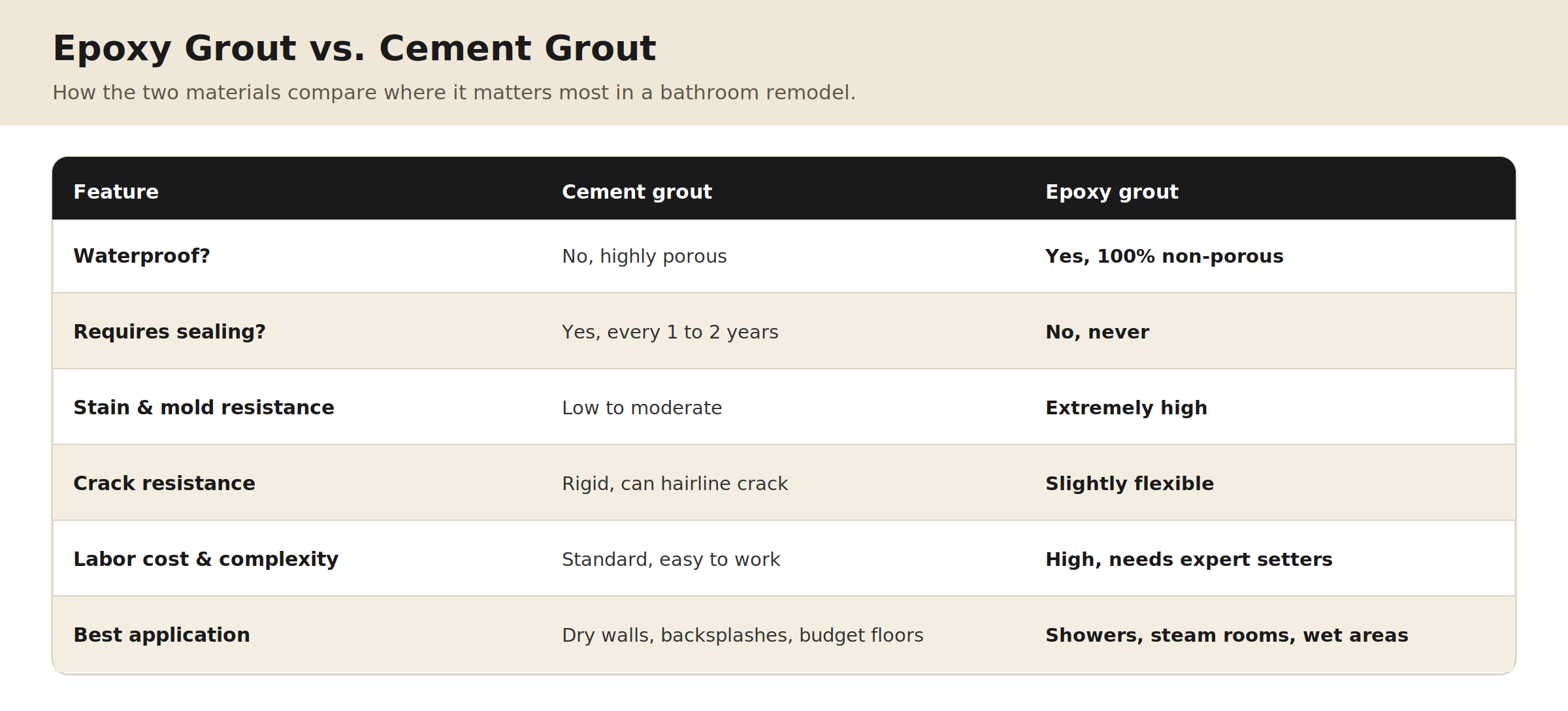
The pattern is clear: epoxy costs more up front and demands a skilled installer, but it buys you a waterproof, zero-maintenance, mold-proof joint that lasts. Cement grout saves money and installs easily, but it asks for ongoing sealing and accepts more risk in wet zones.
A Quick Grout Planning Checklist
Before the tile is ordered, run through these with your contractor so grout is a decision, not an afterthought:
- Discuss grout material during the design phase, not after the tile shows up on site.
- Confirm your tile setter has verified experience and the right tools for mixing and cleaning epoxy.
- If you're using natural stone, ask whether urethane grout or pre-sealing is needed to prevent resin bleed.
- Budget for the premium: epoxy materials and the skilled labor behind a flawless install both cost more.
Which Grout Is Right for Your Bathroom?
For a custom shower, steam room, wet room, or heated floor, epoxy grout is almost always the right answer. It's waterproof, mold-proof, stain-proof, and maintenance-free, and it protects the investment you made in the tile. For dry areas and delicate natural stone, cement or a specialty grout can be the smarter, safer choice. The best remodels don't pick one material for the whole house. They match the grout to the surface, and they hire an installer who can execute epoxy correctly.
Brutsky Builds is a Bellevue-based, licensed, insured, and bonded design-build general contractor (license #BRUTSBL783ON) serving Seattle and the greater Eastside. A luxury bathroom shouldn't demand constant maintenance, so we prioritize the behind-the-walls waterproofing and material science, epoxy grouting included, that keep a custom shower flawless for decades. Explore our custom bathroom remodeling services or call (206) 316-9937 to start planning a bathroom built to last a lifetime.


.svg)
.svg%20fill.svg)


.webp)
.webp)
.webp)

.svg)